

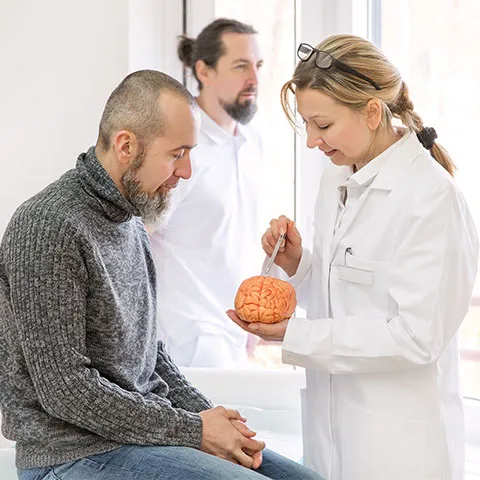
The Way Patients Choose Neurology & Neurosurgery Has Changed
Twenty years ago, most patients reached a neurologist or neurosurgeon through physician referrals.
Today, referrals are only one part of the decision.
Patients and caregivers actively research symptoms, compare specialists, evaluate hospitals, read reviews, seek second opinions, and look for reassurance before booking an appointment. For neurosurgical care, clinical experience, procedure-specific expertise, hospital reputation, and the quality of interaction with the surgeon are among the strongest influences on patient choice.
If your practice is not visible and trusted throughout this journey, prospective patients may choose another specialist before they ever contact you.
Why Many Neuro and Spine Practices Struggle to Grow
Clinical expertise alone is no longer enough to support predictable practice growth.
Heavy Dependence on Referrals
Referrals remain valuable, but they are becoming less predictable. Patients frequently validate referrals online before making an appointment.
Patients Spend Weeks Researching
Neurological and neurosurgical decisions are rarely immediate.
Patients compare:
- symptoms
- Treatment options
- Doctors
- Hospitals
- Reviews
- Success stories
- Second opinions
Only then do they decide whom to trust.
Hospitals Dominate Digital Visibility
Large hospitals often rank ahead of independent neurologists and neurosurgeons because they invest in search visibility, educational content, and online reputation.
Caregivers Influence Every Decision
Unlike many specialities, neurology and neurosurgery decisions are frequently made by families rather than patients alone.
Your digital presence must educate and reassure everyone involved.
AI Is Changing Healthcare Discovery
Patients increasingly ask conversational questions instead of searching only with keywords.
Practices with authoritative educational content are better positioned to appear in AI-powered search experiences.
How Today's Neuroscience Patient Chooses a Specialist
Symptoms begin
Answers
Online search
Reliable information
Research conditions
Education
Compare specialists
Experience and expertise
Read reviews
Trust
Seek second opinion
Confidence
Book consultation
Clear next step
Continue treatment
Long-term support
Every interaction shapes whether a patient chooses your practice or another.
Where Neuroscience Practices Lose Patients
Many practices lose prospective patients long before a consultation is booked.
Invisible for Symptom Searches
Patients search for migraine, tremors, slipped discs, seizures, memory loss, and brain tumours, not simply "neurologist near me."
Limited Educational Content
Patients want clear explanations before trusting a specialist. Without useful educational resources, they move to another website.
Weak Online Reputation
Reviews, testimonials, credentials, publications, and patient experiences all contribute to trust.
Generic Websites
A website that only lists services does little to answer patient questions or demonstrate specialist expertise.
Poor Local Visibility
If your practice is difficult to find in local search results or on Google Business Profile, patients may never discover your services.
No AI Visibility Strategy
Healthcare discovery is changing rapidly. Practices that publish structured, authoritative content are more likely to be surfaced by AI-assisted search experiences.
The Questions Patients Ask Before They Choose You
Symptoms
- Why do I keep getting migraines?
- Why is my hand numb?
- Why am I losing my balance?
- Why do I have tremors?
Conditions
- What causes epilepsy?
- Can Parkinson's disease be treated?
- What are the early signs of dementia?
- What causes nerve pain?
Procedures
- Do I need spine surgery?
- Is brain tumour surgery safe?
- What is Deep Brain Stimulation?
- When is epilepsy surgery recommended?
Choosing a Specialist
- When should I see a neurologist?
- Do I need a neurosurgeon?
- Should I get a second opinion?
- Who is the best specialist for my condition?
Conditions Patients Search Before Finding a Specialist
Neurology
- Migraine
- Epilepsy
- Parkinson's Disease
- Multiple Sclerosis
- Stroke
- Dementia
- Memory Disorders
- Peripheral Neuropathy
- Vertigo
- Tremors
Neurosurgery
- Brain Tumours
- Spine Disorders
- Herniated Disc
- Cervical Myelopathy
- Lumbar Disc Disease
- Hydrocephalus
- Brain Aneurysm
- Trigeminal Neuralgia
- Traumatic Brain Injury
- Spinal Tumours
Service Lines That Drive Practice Growth
Stroke Centre
Spine Surgery
Brain Tumour Programme
Epilepsy Centre
Headache Clinic
Memory Clinic
Parkinson's & Movement Disorders
Functional Neurosurgery
Neuro Rehabilitation
Neurophysiology Services
This mirrors how neuroscience departments present their expertise.
Growth Goals Look Different for Every Practice
Whether you are an independent neurologist, a neurosurgeon, or a multidisciplinary neuroscience centre, your marketing strategy should support your business objectives.
Increase specialist consultations.
Grow elective spine surgery.
Promote epilepsy services.
Expand movement disorder programmes.
Build a recognised stroke centre.
Increase second opinion consultations.
Strengthen referrals through digital credibility.
Expand across multiple clinic locations.
How HealthcareDMS Supports Every Stage of Practice Growth
Growth Stage
Be discovered
HealthcareDMS Solution
Healthcare SEO, Local SEO, AI Visibility
Growth Stage
Build authority
HealthcareDMS Solution
Educational content, Doctor Branding
Growth Stage
Earn trust
HealthcareDMS Solution
Reputation Management, Patient Reviews
Growth Stage
Convert visitors
HealthcareDMS Solution
High-performing websites, Landing Pages
Growth Stage
Grow programmes
HealthcareDMS Solution
Procedure specific campaigns
Growth Stage
Measure outcomes
HealthcareDMS Solution
Analytics, ROI Reporting
Contact Us
Let’s Discuss Your Growth Strategy!
Have questions or ready to get started? Let’s talk! Our team is here to help your practice grow.