
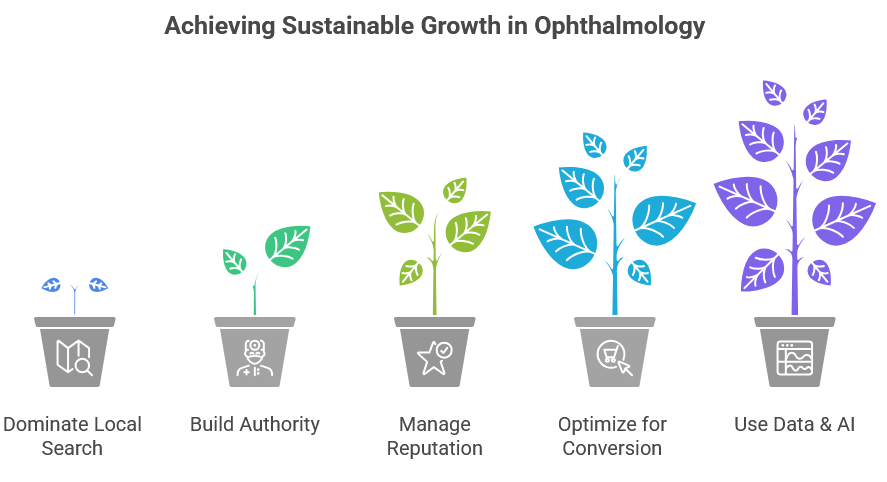


Launching a new ophthalmology practice today is very different from what it was a decade ago. Patients no longer rely only on referrals or walk-ins. They research online, compare surgeons, read reviews, evaluate technology, and often decide before they even call the clinic. In competitive cities, even highly skilled ophthalmologists can struggle if their digital presence is weak.
The key to sustainable growth is not attracting more website visitors it’s attracting high-intent eye care patients. These are patients actively searching for cataract surgery, LASIK consultation, glaucoma management, or retina treatment and are ready to book an appointment. Winning these patients requires a strategic approach to ophthalmology digital marketing, focused ophthalmologist marketing, and structured Healthcare Reputation Management.
Who Are High-Intent Eye Care Patients?
High-intent eye care patients are individuals actively searching for solutions like cataract surgery, LASIK, glaucoma treatment, or retina consultation. They compare providers, read reviews, evaluate expertise, and are ready to book an appointment. Effective ophthalmology digital marketing focuses on identifying and attracting these decision-ready patients rather than generating general website traffic.
High-intent patients are people who:
- Search terms like “best cataract surgeon near me” or “LASIK specialist in [city]”
- Compare 2–3 clinics before deciding
- Read reviews and check ratings carefully
- Visit service pages and pricing information
- Look for experience, safety, and technology details
They are not browsing casually. They are actively evaluating providers and preparing to book.
Your marketing must match their urgency and decision-making mindset.
Step 1: Dominate Local Search for Eye Care Services
When patients search “cataract surgeon near me” or “best ophthalmologist in [city],” your clinic must appear at the top. Local SEO, optimized service pages, and a strong Google presence are foundational elements of digital marketing for doctors. Without local visibility, even the most skilled ophthalmologist can remain invisible in a competitive market.
When patients search for:
- Cataract surgery near me
- LASIK clinic in [city]
- Retina specialist consultation
- Glaucoma doctor near me
Your clinic must appear prominently in search results.
Strong ophthalmology digital marketing includes:
- Service-specific SEO pages (cataract, LASIK, retina, glaucoma)
- Optimized Google Business Profile
- Location-based keyword strategy
- Structured website architecture
- High-quality, patient-focused content
Local SEO is often the most predictable source of appointment-ready patients.
Step 2: Build Authority Around the Ophthalmologist
In eye care, patients trust expertise more than branding alone. Strategic ophthalmologist marketing highlights credentials, surgical experience, advanced technology, and patient outcomes. Authority-driven positioning increases confidence and shortens the patient decision cycle.
- Showcasing surgical experience and certifications
- Highlighting advanced technology (femtosecond lasers, OCT, premium IOLs)
- Publishing educational content that answers patient concerns
- Sharing before-and-after outcomes when compliant
Patients feel more confident when they see clarity, transparency, and authority.
Step 3: Make Healthcare Reputation Management a Priority
Online reviews strongly influence appointment decisions, especially for elective procedures like LASIK. Structured Healthcare Reputation Management ensures consistent review generation, professional responses, and proactive monitoring. A strong online reputation builds trust before a patient even enters your clinic.
In competitive markets, online reputation often determines who gets the appointment.
- Generating consistent, authentic patient reviews
- Responding professionally to feedback
- Monitoring ratings across platforms
- Addressing negative experiences promptly
Even a 0.5-star difference can impact patient choice significantly especially for elective procedures like LASIK.
Step 4: Optimize for Conversion, Not Just Visibility
Traffic alone does not guarantee appointments. Your website must clearly communicate procedures, safety, pricing transparency, and doctor expertise while offering easy booking options. A results-focused healthcare digital marketing agency prioritizes conversion optimization as much as visibility.
To attract high-intent patients, your website must:
- Clearly explain procedures in simple language
- Address safety, risks, and recovery time
- Highlight doctor credentials prominently
- Offer easy booking options (form, call, WhatsApp)
- Include strong calls-to-action
A well-optimized website turns searchers into scheduled consultations.
Step 5: Use Data and AI to Improve Marketing Performance
Modern ophthalmology digital marketing uses data and AI tools to track which campaigns generate actual consultations, not just clicks. This approach helps optimize budgets, refine targeting, and improve patient acquisition efficiency. For new practices, data-driven marketing reduces risk and accelerates growth.
- Identify which keywords bring real appointments
- Optimize ad targeting for LASIK and cataract procedures
- Track patient acquisition cost
- Improve campaign efficiency over time
For new practices with limited budgets, AI-powered optimization reduces waste and accelerates growth.
Common Mistakes New Ophthalmology Practices Make
Many new clinics rely solely on referrals, run untargeted ads, or ignore online reviews. Without structured ophthalmologist marketing and reputation management, patient flow becomes inconsistent. Avoiding these mistakes early helps build a predictable growth system.
- Relying only on referrals
- Running generic ads without targeting
- Ignoring online reviews
- Having outdated or non-optimized websites
- Competing only on price instead of positioning
Avoiding these mistakes early creates a strong foundation for long-term growth.
How New Ophthalmology Practices Can Win in Competitive Markets
Success requires a combination of strategic visibility, strong branding, and consistent reputation building. By integrating ophthalmology digital marketing, structured Healthcare Reputation Management, and data-driven optimization, new practices can compete effectively with established hospitals. The right approach attracts patients who are ready to book — not just browse.
- Strategic ophthalmology digital marketing
- Strong ophthalmologist branding
- Structured Healthcare Reputation Management
- Local SEO dominance
- Data-driven optimization
When these elements work together, practices attract patients who are already ready to book not just browsing.
In highly competitive markets, the clinics that win are those that combine medical excellence with strategic digital visibility.
FAQs
1. What is ophthalmology digital marketing?
It is a specialized marketing approach focused on attracting eye care patients through SEO, paid ads, reputation management, and online branding.
2. How long does it take for a new ophthalmology clinic to see SEO results?
Typically 3–6 months depending on competition, city size, and consistency of strategy.
3. Why is Healthcare Reputation Management important for eye clinics?
Patients often check reviews before scheduling procedures like LASIK or cataract surgery. A strong reputation directly increases appointment bookings.
4. Should ophthalmologists invest in paid ads or SEO first?
Ideally both. Paid ads generate immediate leads, while SEO builds long-term visibility and sustainable patient flow.
5. Can new practices compete with large eye hospitals?
Yes. With targeted ophthalmologist marketing, strong branding, and local SEO focus, new practices can effectively compete and grow.